
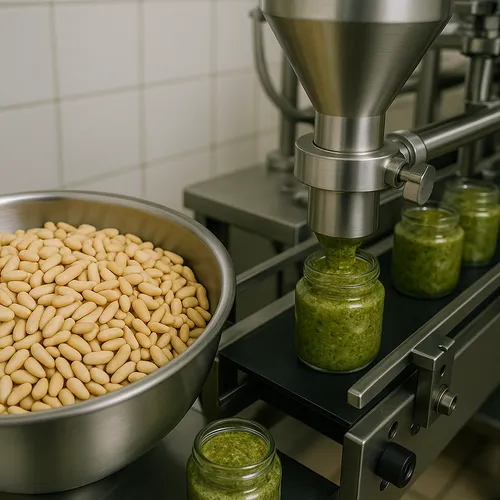
Why pine nuts matter so much in pesto formulation
In most pesto recipes, pine nuts contribute more than flavour—they provide creaminess, binding stability and a rich aromatic base. High oil content ensures smooth blending and enhances mouthfeel, while clean flavour allows basil and cheese notes to stand out.
Preferred pine nut types for pesto
Pesto manufacturers typically prefer pine nuts with:
- High natural oil content for a creamy, smooth texture
- Mild sweetness without bitterness or resin notes
- Uniform colour to maintain visual consistency in finished pesto
- Low breakage levels for predictable formula costs
1. Turkish “Pinus pinea” (Mediterranean pine nuts)
The classic choice for premium pesto. These nuts offer a balanced, slightly sweet flavour with excellent oil composition. Their elongated shape and pale colour are widely preferred in Europe and North America.
2. Smaller grades for more cost-sensitive pesto formulations
Some producers choose smaller kernels or controlled breakage to reduce formula cost while maintaining flavour. This is common in foodservice pesto and blended formulations.
Key quality parameters buyers should specify
To avoid inconsistencies, pesto producers typically define quality expectations in their purchase contracts:
- Size range (e.g., 6–8 mm or 7–9 mm)
- Colour uniformity — darker kernels can alter pesto appearance
- Moisture level — typically under 4%
- Foreign material control via sorting and metal detection
- Breakage percentage — critical for price and performance
How pine nuts behave during processing
If pine nuts are too dry or too old, they may grind inconsistently and cause graininess in the pesto. Fresh, properly stored pine nuts create a noticeably smoother texture. This is why many manufacturers prefer to source new-crop pine nuts and maintain stock rotation throughout the year.
Bulk packaging recommendations
For pesto applications, exporters commonly pack pine nuts in:
- Vacuum bags (5 kg or 10 kg) inside cartons — best for freshness
- Modified atmosphere packs — extended shelf life, ideal for long storage
- Standard poly-lined cartons — suitable for high-turnover factories
Sourcing strategies for stable pricing
Pine nuts are subject to global price fluctuations due to crop yield variability. Many industrial buyers choose:
- Quarterly or semiannual contracts to secure pricing
- Mixed-container shipments from Turkey to combine pine nuts with other nuts
- Pre-season booking for the most competitive rates
Summary
For pesto manufacturers, pine nuts are both a functional and sensory cornerstone of the recipe. Selecting the right grade and packing type ensures consistent product quality and optimized production performance.
If you would like assistance choosing pine nut grades for your pesto line, our team can support with samples, specifications and competitive bulk quotations.