
Why pine nut origin matters for bulk buyers
Unlike many other tree nuts, pine nuts vary dramatically by origin in terms of size, flavour, colour, oil content and yield per kilogram. These differences influence everything from pesto manufacturing to salad toppings and gourmet nut mixes.
Most buyers compare origins on four key attributes:
- Flavour profile — delicate, resinous, buttery or strong.
- Kernel size & shape — long Mediterranean types vs shorter Asian varieties.
- Colour uniformity — important for retail visibility and luxury applications.
- Price stability — affected by global harvesting and supply dynamics.
Overview of major pine nut origins
Below is a simple breakdown of the most commonly traded pine nut origins and where they fit in international markets.
1. Turkish pine nuts (Pinus pinea)
Considered one of the premium origins globally. Turkish pine nuts offer:
- Large, elongated kernels
- Light, clean colour with minimal spotting
- High demand among gourmet buyers and pesto brands
- Stable processing quality and traceability
Turkish pine nuts are highly preferred in premium retail, restaurant concepts and luxury gifting.
2. Mediterranean origins (Spain, Italy, Portugal)
Mediterranean pine nuts are regarded as benchmarks for:
- Excellent flavour complexity
- Very high uniformity
- Strong brand perception in Europe
Limited availability often results in higher price points compared to other origins.
3. Chinese origins (various species)
China is the largest global exporter of pine nuts, offering:
- Smaller kernel sizes compared to Mediterranean types
- Distinct flavour notes depending on region
- Competitive pricing
Best suited for value-driven retail lines, foodservice projects and mixed nut blends.
4. Siberian pine nuts
A niche origin with:
- Shorter, rounded kernels
- Intense pine-resin flavour
- High oil content
Typically used in craft food products and regional specialties.
How to match origin with application
The ideal origin depends on how the pine nuts will be used. Here is a simplified guide:
- Pesto manufacturing → Turkish or Mediterranean origins for stable oil release and consistent colour.
- Gourmet salad toppings → Turkish origins preferred due to size and visual appeal.
- Mixed nut blends → Chinese origins for competitive pricing and good availability.
- Luxury gifting / retail tins → Mediterranean origins for premium positioning.
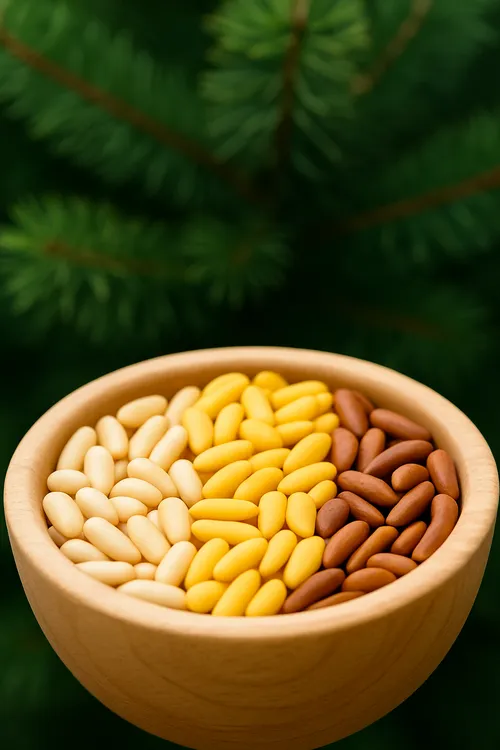
Visual comparison of common origins
The image below demonstrates how kernel size, length and colour vary between major origins. Buyers often request such comparisons during product development.
What importers should ask suppliers
When evaluating a pine nut supplier, importers typically request:
- Detailed size calibration (count per 100g or per kg)
- Colour uniformity range
- Foreign matter and shell tolerance
- Origin documentation
- Pesticide and heavy metal analysis
- Bulk packaging options — vacuum, poly-lined cartons, MAP
Clear specifications help ensure predictable production performance, especially for pesto and gourmet products.
Summary
Selecting the right pine nut origin is a strategic decision that determines flavour performance, retail perception and price competitiveness. Turkish pine nuts sit at the crossroads of premium quality, good availability and strong visual appeal, making them suitable for most high-value applications.
Importers seeking stable supply, strong quality control and flexible packaging formats will benefit from a long-term sourcing model with experienced Turkish suppliers.