
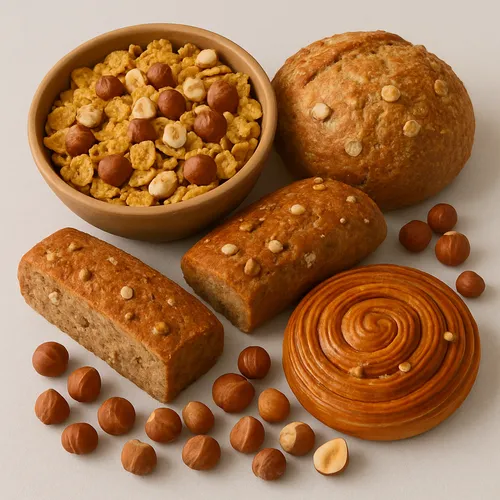
Why hazelnuts are so valuable in bakery and cereal formulations
Hazelnuts from Turkey are prized for their consistent flavor, balanced oil content and firm texture. Once roasted, they deliver a distinctive aroma that stands out even in formulations with strong ingredients such as cocoa, spices or grains. Manufacturers appreciate hazelnuts for:
- High visual impact — sliced or diced hazelnuts immediately signal premium quality.
- Excellent roasting behavior — even color development and strong aroma release.
- Good shelf stability when stored properly and used in dry applications.
- Versatile cut options that suit everything from bread toppings to granola clusters.
Most common hazelnut formats used by bakeries
The bakery sector uses a wide spectrum of hazelnut formats, each chosen for specific functional and aesthetic reasons. Understanding these differences helps buyers define the right specification for their product.
1. Sliced hazelnuts
Widely used in cakes, pastries, cookies and biscuits. Their thin profile allows:
- Quick, even roasting inside the oven
- High surface-area coverage for premium appearance
- A delicate crunch without overpowering the texture
2. Diced hazelnuts (2–4 mm, 4–6 mm, 6–8 mm)
The workhorse of industrial bakery and cereal manufacturing. Diced hazelnuts:
- Provide uniform distribution in doughs and batters
- Are ideal for granola bars and clusters
- Offer controlled crunch and predictable weight contribution
Buyers typically specify roast level, cut size tolerance and oil content to achieve consistent performance.
3. Roasted halves
Used mostly in premium confectionery or artisanal bakery applications where strong visual impact is required. Although more expensive, halves are a powerful marketing signal of quality.
Hazelnuts in breakfast cereals and granola mixes
Cereal and granola producers depend on hazelnuts for their ability to withstand mixing, baking and long storage. Key advantages include:
- Strong aroma retention during high-temperature baking.
- Crunch stability even with sugar binders or honey coatings.
- Color uniformity for premium visual consistency.
Many international cereal brands use a combination of roasted diced hazelnuts and sliced hazelnuts to balance texture and cost efficiency.
Hazelnuts as toppings for dairy, desserts and ice cream
Toppings require hazelnuts that are visually appealing, mechanically stable and resistant to softening. Preferred formats include:
- Diced roasted hazelnuts — ideal for ice cream, frozen yogurt and dessert cups.
- Caramelized hazelnut pieces — used for premium toppings in pastry and gelato.
- Granulated roasted hazelnuts — suitable for dry mixes and decoration.
Moisture migration is a key concern: manufacturers often request tighter moisture ranges to prevent loss of crunch.
Which roast levels perform best?
Roast level directly influences flavor and visual tone:
- Light roast — subtle flavor, preferred for white batters and delicate pastries.
- Medium roast — balanced aroma, used in most bakery and cereal applications.
- Dark roast — bold flavor, ideal for chocolate-rich creations.
Buyers often run bench-scale trials to compare spreadability, aroma, and heat behavior before locking in a roast level for long-term supply programs.
Packaging formats for industrial buyers
Most bakeries and cereal factories source hazelnuts in:
- Vacuum cartons (5–25 kg) for diced and sliced formats
- Big bags for large-volume cereal and granola plants
- Modified atmosphere cartons for longer shelf-life requirements
Mixed-container shipments (hazelnut cuts + pastes + roasted kernels) are common for optimizing freight.
Summary
Hazelnuts remain one of the most valuable ingredients for bakery, cereal and topping applications because of their flavor, versatility and robust industrial performance. By selecting the correct cut size, roast level and packing format, buyers can tailor hazelnuts to fit a wide variety of premium formulations.
Atlas supplies hazelnut formats for all industrial needs — from diced kernels for cereal clusters to roasted slices for pastry toppings and premium bakery decoration.