
Why chestnuts work so well in ready meals
Chestnuts offer a unique combination of natural sweetness, soft texture and neutral flavor, allowing them to blend seamlessly into savory dishes. Ready-meal manufacturers appreciate their versatility and ability to:
- Enhance mouthfeel with a creamy yet structured bite.
- Bind ingredients naturally without gums or artificial thickeners.
- Add nutritional value through fiber and slow-release carbohydrates.
- Absorb seasoning, making them ideal for flavored or spiced products.
Many European, Middle Eastern and Asian brands use Turkish chestnuts in both meat-based and plant-based dishes, taking advantage of their naturally comforting flavor profile.
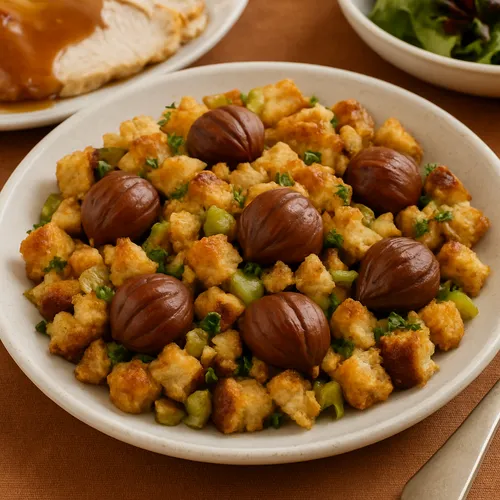
Chestnut stuffing for poultry and seasonal dishes
One of the most popular uses of Aydın chestnuts is in stuffing for poultry, particularly during seasonal peaks such as Thanksgiving, Christmas and New Year. Manufacturers favor:
- Whole peeled kernels for premium stuffing with visible chestnut pieces.
- Diced chestnuts for uniform distribution in industrial mixers.
- Chestnut purée as a binding ingredient to create a smooth, cohesive texture.
Chestnuts blend especially well with herbs (sage, rosemary, thyme), dried fruits (raisins, figs, apricots) and grains (rice, bulgur), making them an excellent component for both traditional and modern recipes.
Popular ready-meal applications
Aydın chestnuts are used extensively in frozen and chilled ready meals across Europe, North America and Asia. The most common applications include:
- Chicken and turkey meals with chestnut-based stuffing or side components.
- Beef and lamb stews where chestnuts add body and sweetness to sauces.
- Vegetarian casseroles and plant-based dishes that rely on chestnuts for texture.
- Asian-style stir-fry meals where chestnuts provide a mild, crunchy contrast.
- Root-vegetable blends used in meal kits or private-label convenience foods.
Because of their mild, adaptable taste, chestnuts often reduce the need for added sugars or starches — a strong advantage for clean-label product development.
Chestnut purées for industrial cooking
Purées made from Aydın chestnuts are widely used in:
- ready-meal sauces and gravies
- soups and creamy vegetable bases
- filled pasta products such as ravioli and tortellini
- plant-based spreads and savory dips
Industrial buyers typically request detailed specifications for:
- Dry matter content for consistency.
- Particle size depending on whether a smooth or coarse texture is desired.
- Color uniformity, especially for premium, additive-free formulations.
Packaging formats used by ready-meal manufacturers
Bulk buyers typically choose from several packaging options depending on storage and production flow:
- 10 kg or 12.5 kg poly-lined cartons for frozen peeled kernels.
- Vacuum-packed blocks for chestnut purée to preserve freshness and reduce oxidation.
- Food-service bags of 1–2.5 kg for restaurants and commissaries.
These formats allow manufacturers to work efficiently on both industrial-scale and mid-sized production lines.
Specification points buyers should define
Food manufacturers generally include the following details when briefing a Turkish supplier:
- Whole, diced or purée format and required calibration.
- Brix, moisture and purity levels for purées.
- Frozen storage requirements and shelf-life targets.
- Origin traceability to guarantee Aydın chestnut quality.
- Packaging size based on batch size and handling preferences.
Summary
Aydın chestnuts are one of the most adaptable ingredients in the ready-meal and stuffing industry. Their mild flavor, excellent texture and binding ability make them ideal for a wide range of applications, from poultry stuffing and stews to plant-based meals and prepared dishes.
Whether you require whole kernels, diced formats or purée, our team can supply consistent quality and tailor specifications to your production needs.