
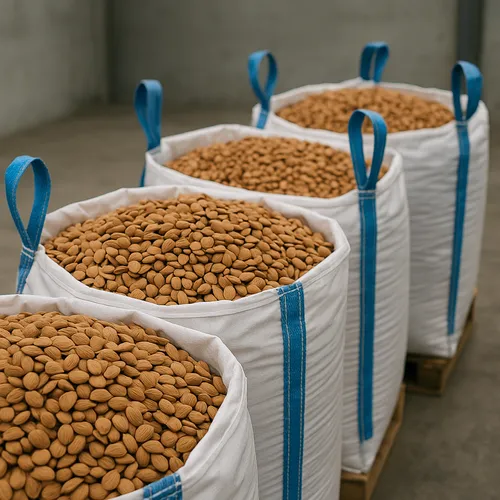
Common bulk packaging formats for apricot kernels
Exporters typically offer several packaging options depending on whether the kernels are destined for snack production, oil extraction, marzipan/nougat applications or roasting and blending. The most widely used formats include:
1. 25 kg or 50 kg polypropylene bags
A cost-effective format commonly chosen for oil extraction and large-scale roasting operations. PP bags allow airflow but do not protect against humidity spikes or foreign odours.
2. Vacuum-packed blocks inside cartons
Ideal for producers who need extended shelf life, controlled microbiology and minimal oxidation. Vacuum bags reduce oxygen exposure significantly and help preserve kernel flavour.
3. Big bags (500–1,000 kg)
Suitable for industrial users with high throughputs. Big bags reduce packaging waste and pallet count, but require controlled storage to prevent moisture migration.
4. Paper bags with polyethylene liners
A good compromise between airflow and protection. Liners reduce moisture absorption, while the paper provides mechanical protection and stackability.
Factors that influence shelf life
Apricot kernels naturally contain oil, making them sensitive to oxidation, heat and humidity. Shelf life typically ranges from 12–24 months depending on conditions.
- Oxygen exposure — accelerates rancidity; vacuum packing extends life significantly.
- Temperature — kernels store best below 15°C, away from heat sources.
- Humidity — high moisture increases the risk of mould; ideal RH is under 60%.
- Light — prolonged exposure can degrade oils and colour.
Recommended storage guidelines
To maintain stable quality throughout the year, importers generally follow these practices:
- Store pallets in a cool, dry, well-ventilated warehouse.
- Avoid stacking bags directly on the floor—use pallets with slip sheets.
- Rotate stocks based on FIFO (first in, first out).
- Where possible, request low-moisture kernels for longer stability.
- Keep products away from spices, chemicals or strong-smelling goods that may transfer odour.
Choosing the right format based on your project
Buyers select packaging depending on production style, warehouse conditions and contract duration:
- Oil extraction — PP bags or big bags are most cost-effective.
- Roasting & snack mixes — cartons or vacuum packs preserve freshness.
- Premium confectionery — vacuum-packed blocks recommended for flavour stability.
- Long-term buffer stocks — vacuum or lined cartons significantly reduce quality risk.
Summary
Apricot kernel packaging is not just a logistics decision—it directly affects flavour, microbiology and commercial shelf life. Importers who align packaging type with storage plans achieve more stable pricing, fewer losses and smoother production cycles.
Our team can advise on packaging, shelf-life expectations and stock planning for different market types. Contact us for detailed specifications or mixed-container options.